How Can Employee Monitoring Support a More Transparent and Productive Workplace?
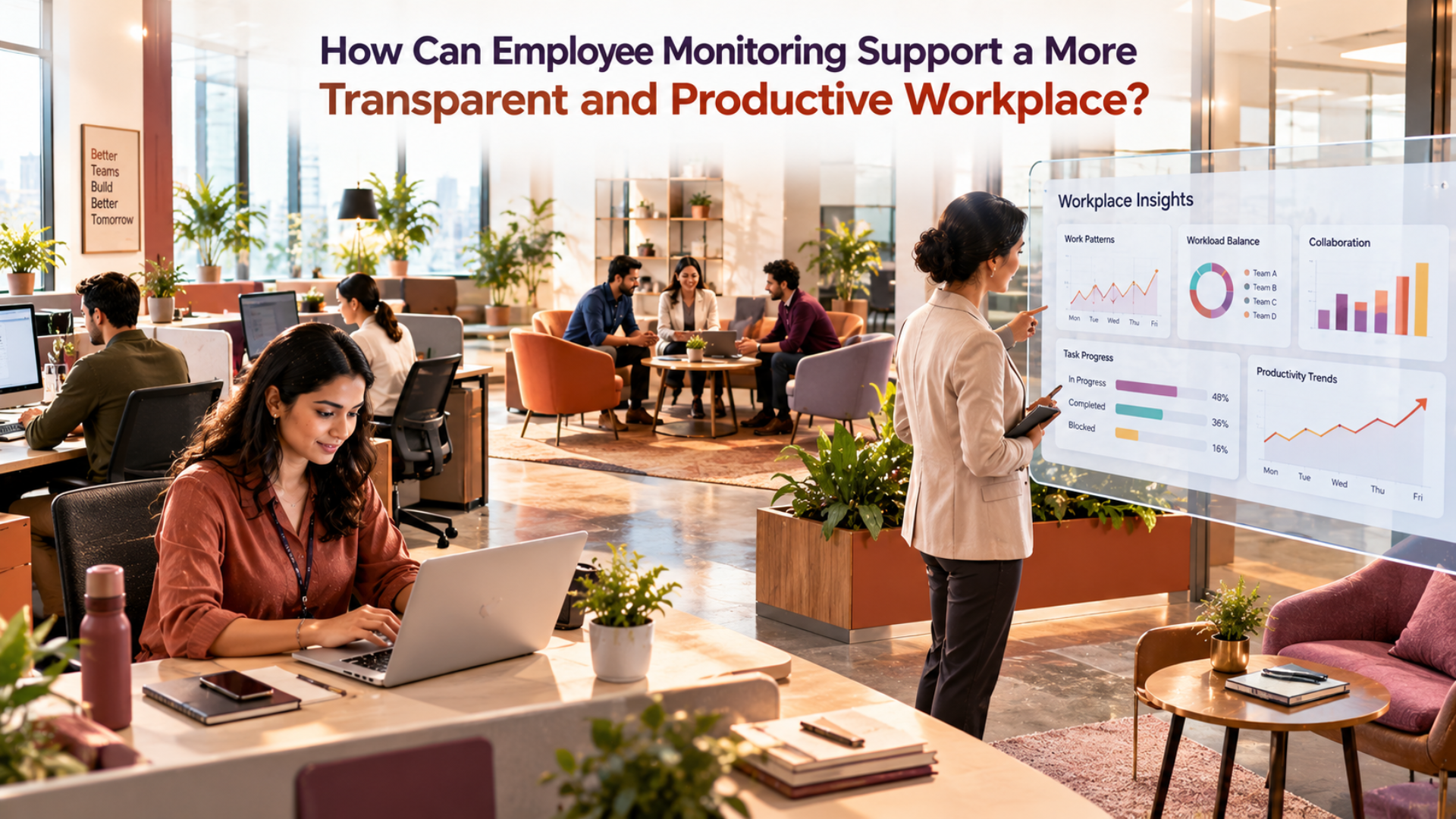
How can businesses understand workplace activity without creating an environment where employees feel constantly watched? The answer depends on how organizations design their approach, communicate its purpose, and use workplace data responsibly. Employee monitoring can help businesses understand work patterns, identify process delays, support remote teams, and improve operational visibility when implemented with clear policies and appropriate safeguards.
Rather than focusing only on tracking activity, modern workplace oversight should help managers understand where processes can be improved. The goal is to create useful visibility while maintaining employee confidence, privacy, and fairness.
What Is the Purpose of Workplace Activity Monitoring?
Workplace ***[Employee monitoring](https://empcloud.com/blog/employee-monitoring-and-productivity-tracking-2026/
)*** involves collecting selected information about how work is performed through company-approved systems, applications, devices, or workflows. The specific information collected depends on the organization's objectives and policies.
Common purposes include:
* Understanding workload distribution
* Identifying workflow bottlenecks
* Supporting remote and hybrid collaboration
* Protecting company systems and information
* Reviewing operational productivity patterns
* Detecting unusual system activity
A well-designed approach focuses on meaningful business information instead of collecting unnecessary personal details.
How Can Monitoring Help Managers Identify Workflow Problems?
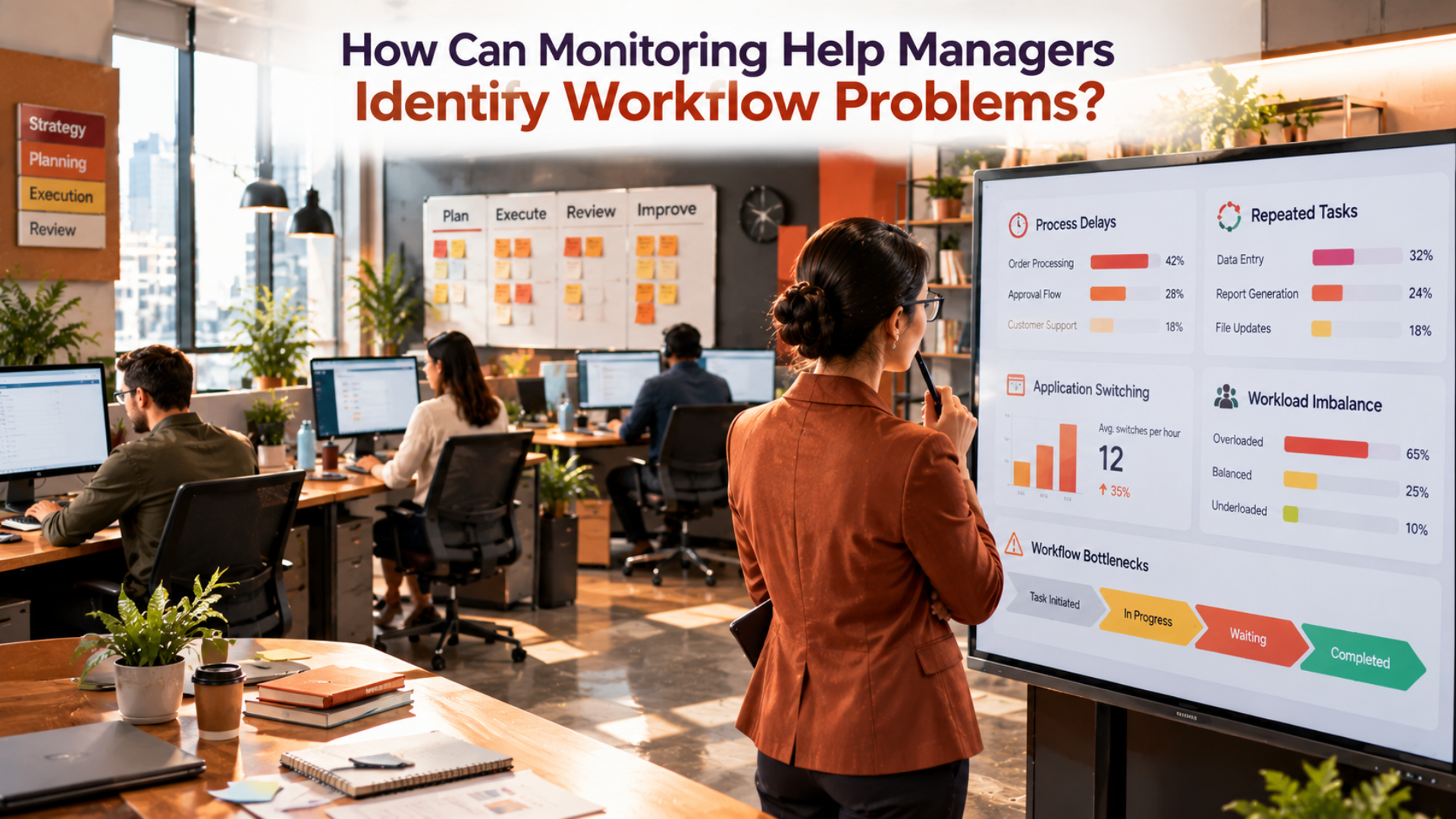
One of the practical benefits of workplace visibility is the ability to identify problems that may otherwise remain hidden.
For example, a manager may notice that employees are spending excessive time switching between disconnected applications. Another department may experience delays because approvals require several manual steps. In such situations, activity information can reveal where processes need redesign rather than simply showing how busy employees appear to be.
Organizations can use these insights to:
1. Identify repetitive administrative work.
2. Improve task allocation across teams.
3. Detect delays in important workflows.
4. Review whether employees have suitable tools.
5. Support better planning for recurring workloads.
This approach shifts attention from individual surveillance toward operational improvement.
Why Does Employee Trust Matter?
Any workplace technology that collects information about employees should be introduced with transparency. Employees are more likely to understand and accept monitoring when they know what information is collected, why it is required, who can access it, and how long it will be retained.
Strong ***[employee trust](https://empcloud.com/blog/employee-trust/
)*** can be supported through clear communication and practical safeguards. Businesses should explain monitoring policies before implementation rather than introducing tracking tools without context.
A responsible policy should clarify:
* What activities or information are monitored
* The legitimate business purpose behind collection
* Who is authorized to review the information
* How data is stored and protected
* When information is deleted
* How employees can raise concerns
Organizations should also avoid treating every metric as a direct measure of performance. Activity levels can provide context, but they do not necessarily represent work quality, creativity, collaboration, or business impact.
How Should Businesses Choose the Right Monitoring Approach?
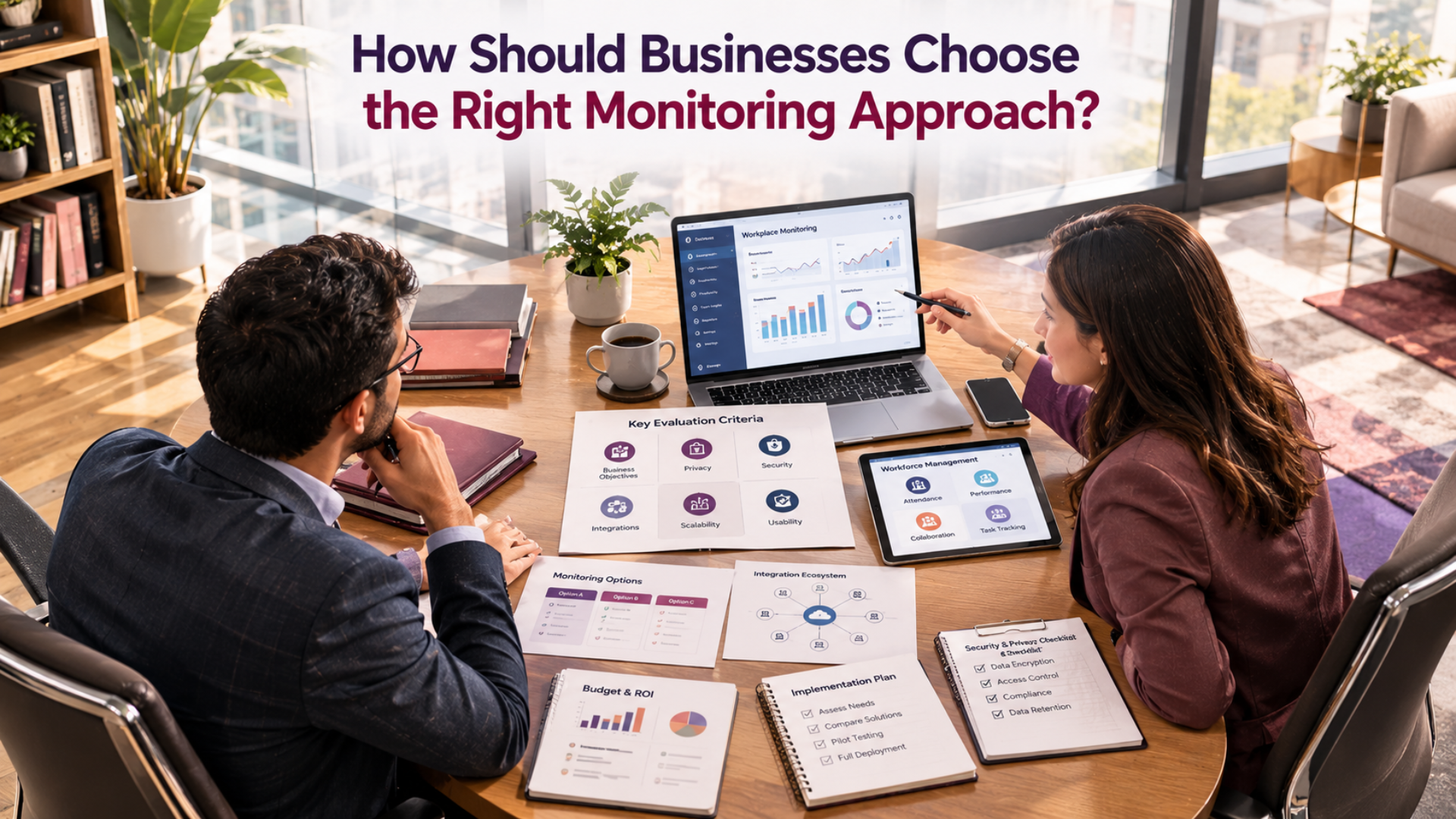
The right solution depends on the organization's workforce structure, technology environment, and specific operational requirements. A company managing remote teams may have different needs from a manufacturing organization, customer-support operation, or professional-services firm.
Before implementing a solution, businesses should consider:
Define the Business Objective
Start with the problem that needs to be solved. If the goal is workflow optimization, collecting unrelated information can create unnecessary complexity.
Select Relevant Data
Only collect information that directly supports the stated objective. Excessive data collection can increase privacy, security, and management challenges.
Establish Access Rules
Not every manager needs access to every type of workplace information. Role-based permissions can help limit exposure and support responsible data handling.
Communicate With Employees
Clear explanations can reduce confusion and establish expectations before monitoring begins. Training managers is equally important so that collected information is interpreted consistently.
What Role Do Monitoring Applications Play?
Different ***[Monitoring Applications](https://medium.com/@cloudvision14/why-are-monitoring-applications-becoming-essential-for-modern-digital-success-f1af633f3a05
)*** can provide different types of workplace visibility. Depending on the solution, organizations may receive information about application usage, workflow activity, system access, attendance patterns, or security-related events.
However, businesses should evaluate these tools based on their actual requirements rather than selecting features simply because they are available.
Important evaluation factors include:
* Data collection and privacy controls
* Reporting capabilities
* Integration with existing business systems
* Permission management
* Customization options
* Security features
* Employee communication capabilities
* Scalability for future workforce growth
A solution that provides extensive information but lacks clear governance may create more management complexity than value.
How Can Monitoring Be Used Responsibly?
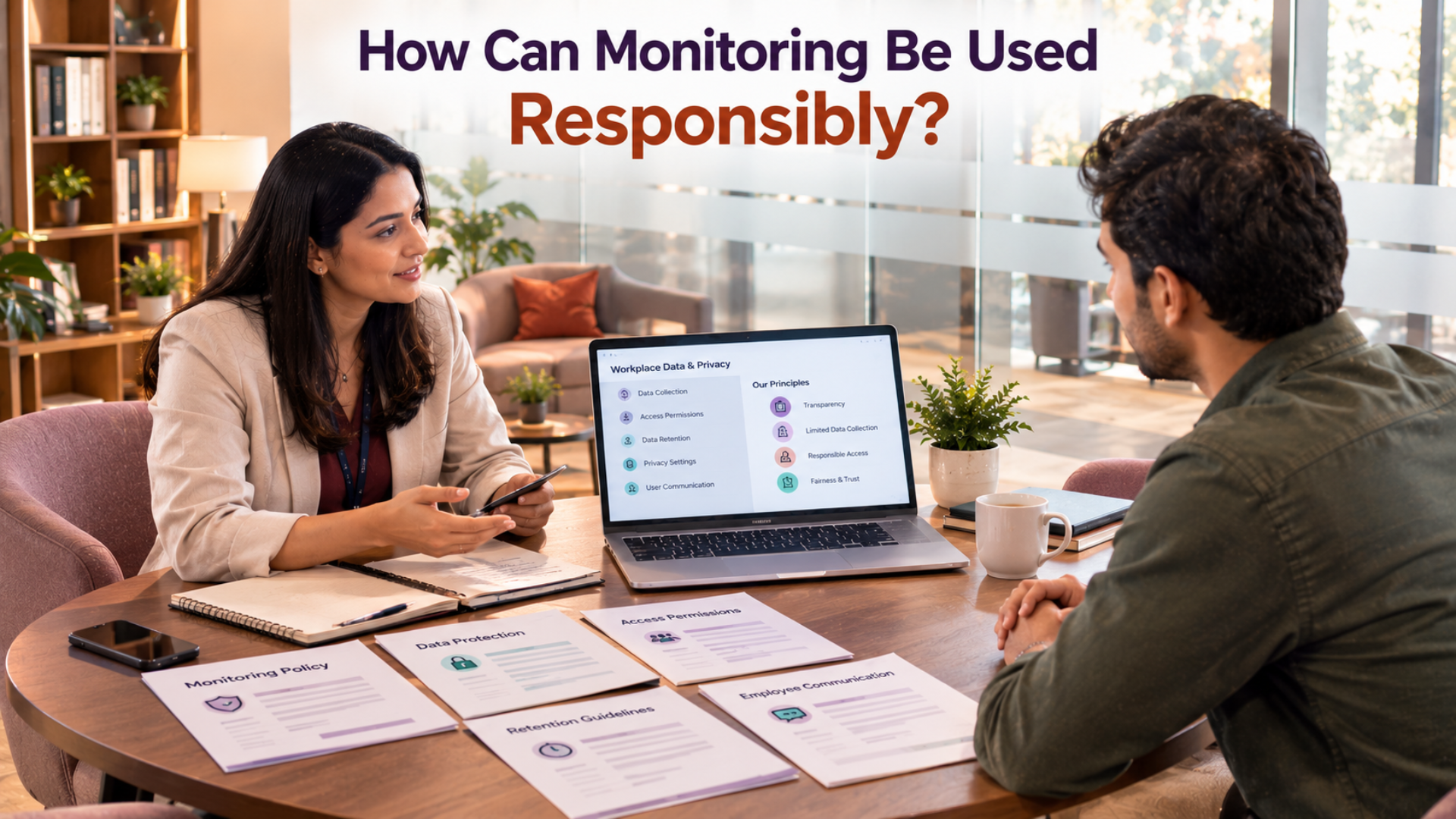
Responsible implementation requires more than installing software. Organizations should establish rules for how information will be collected, interpreted, stored, and acted upon.
Managers should avoid making employment decisions based solely on isolated activity metrics. Instead, workplace data can be considered alongside project outcomes, communication, deadlines, customer results, quality standards, and other relevant business factors.
Regular policy reviews can also help organizations adjust monitoring practices as technology, workforce arrangements, and privacy expectations change.
What Are the Key Benefits for Modern Workplaces?
When implemented thoughtfully, workplace monitoring can support several operational objectives:
* Better visibility: Managers can understand workflow patterns more clearly.
* Process improvement: Repetitive or inefficient activities can be identified.
* Security support: Unusual system behavior can receive additional attention.
* Remote coordination: Distributed teams can gain clearer operational context.
* Resource planning: Activity trends can support workload and staffing decisions.
* Accountability: Clearly defined processes can make responsibilities easier to understand.
The value comes from using information to improve how work is organized rather than simply increasing the amount of data collected.
You can also watch: ***[Ending the 11 PM Email Culture: Work-Life Balance & HR | Future of Work ft. Princy Mishra](https://youtu.be/XbVny6cIKqc?si=eac5Lv-wpqHhnGWg
)***
Summary
Effective ***[Employee monitoring](https://empcloud.com/blog/employee-monitoring-and-productivity-tracking-2026/
)*** should balance operational visibility with privacy, transparency, and responsible data use. Businesses can gain useful insights into workflows, workloads, security, and collaboration when monitoring is connected to clearly defined objectives.
The strongest approach is not necessarily the one that collects the most information. It is the one that gathers relevant data, protects it appropriately, explains its purpose clearly, and uses the resulting insights to improve workplace processes while respecting employees.
FAQ
Is employee monitoring suitable for remote teams?
It can support remote operations by providing visibility into workflows and system activity, provided monitoring practices are transparent and appropriate for the business purpose.
Does monitoring measure employee productivity accurately?
Not by itself. Activity metrics provide limited context and should be considered alongside work quality, outcomes, deadlines, collaboration, and role-specific responsibilities.
What should businesses communicate before introducing monitoring?
Businesses should explain what is collected, why it is collected, who can access it, how it is protected, and how long the information is retained.
Can monitoring improve workplace efficiency?
It can help identify repetitive tasks, workflow bottlenecks, resource gaps, and process delays that businesses may be able to address through better tools or processes.
What is the most important consideration when implementing monitoring?
Organizations should maintain a clear connection between data collection and legitimate business objectives while applying appropriate privacy, security, access, and transparency practices.