# How to Run an AI Calling Pilot Before Full-Scale Deployment?
What happens when an AI calling system looks promising in a demo but struggles with real customers? How can a business test call quality, workflows, compliance, and team adoption without disrupting its existing operations?
An ***[AI Calling Pilot](https://callified.ai/blog/ai-calling-pilot-validate/)*** provides a controlled way to answer those questions before committing to a full-scale rollout. Instead of deploying automation across an entire sales or support operation, businesses can test it with a limited audience, defined use cases, and measurable goals. The results can then guide improvements before the technology is expanded.
**What Is an AI Calling Pilot?**
An AI calling pilot is a limited implementation of an AI-powered calling solution designed to evaluate its performance under real operating conditions.
Rather than replacing an entire calling operation immediately, the pilot might involve:
* A small number of campaigns
* A specific customer segment
* One sales or support workflow
* A limited group of users
* A defined testing period
The goal is not simply to determine whether the technology works. It is to understand where it works, where it needs improvement, and what must be changed before scaling.
**Why Run a Pilot Before Full Deployment?**
Full-scale deployment can introduce unnecessary operational risk if the calling workflow has not been tested properly. A pilot creates a controlled environment where potential problems can be identified early.
It can help evaluate:
* Call quality: Does the AI communicate clearly and naturally?
* Conversation handling: Can it respond appropriately to common customer questions?
* Workflow accuracy: Are calls, notes, outcomes, and follow-ups recorded correctly?
* Customer reactions: Do customers understand and respond positively to automated conversations?
* Human handoffs: Can complex conversations be transferred to a human at the right moment?
* Business results: Does the system contribute to meaningful improvements in the selected use case?
**Step 1: Choose a Focused Use Case**
Avoid trying to automate every type of call during the first test.
Select one clearly defined scenario, such as:
* Lead qualification
* Appointment confirmation
* Customer follow-up
* Re-engagement calls
* Basic support inquiries
* Outbound prospecting
It also reduces the number of variables that could make pilot results difficult to interpret.
For example, a business testing outbound lead qualification can define exactly what information the system needs to collect, which questions it should ask, and when the conversation should be transferred to a human.
**Step 2: Define Success Metrics Before Launch**

A pilot should never begin without deciding what success means.
Useful metrics may include:
* Call connection rate
* Conversation completion rate
* Qualified leads generated
* Appointment-booking rate
* Average call duration
* Transfer rate
* Customer response rate
* Follow-up accuracy
* Cost per completed interaction
**Step 3: Build and Test the Calling Workflow**
The next stage is configuring the conversation flow. This includes the opening message, qualification questions, responses to common objections, escalation rules, and closing instructions.
This is where ***[AI Call Setups](https://callified.ai/blog/the-script-mistake-behind-90-of-ai-call-setups-failures/)*** become particularly important. A well-structured setup should connect the conversation with the broader business workflow rather than treating the phone call as an isolated activity.
Test different scenarios before allowing the system to interact with real customers. Include straightforward conversations as well as unexpected responses, interruptions, objections, silence, unclear answers, and requests to speak with a person.
**Step 4: Start With a Small Group**
Once the workflow is tested internally, launch the pilot with a limited audience.
A practical pilot might involve one campaign, one customer segment, or a small operational team. Keeping the scope controlled makes it easier to monitor calls and identify recurring issues.
During this phase, avoid changing too many variables at once. If the script, audience, workflow, and success metrics all change simultaneously, identifying the cause of a particular result becomes much harder.
**Step 5: Monitor Calls and Collect Feedback**
Data tells only part of the story. Human feedback is equally important.
Review selected conversations to identify:
* Repeated customer objections
* Incorrect or confusing responses
* Unnatural conversation patterns
* Missed escalation opportunities
* Problems with information collection
* Situations where customers expect human assistance
Feedback from ***[call center agents](https://callzyai.wixsite.com/mysite/post/how-ai-powered-solutions-help-call-center-agents-work-smarter)*** can be especially valuable because they often encounter the conversations that automation struggles to handle.
**Step 6: Compare Results With the Baseline**
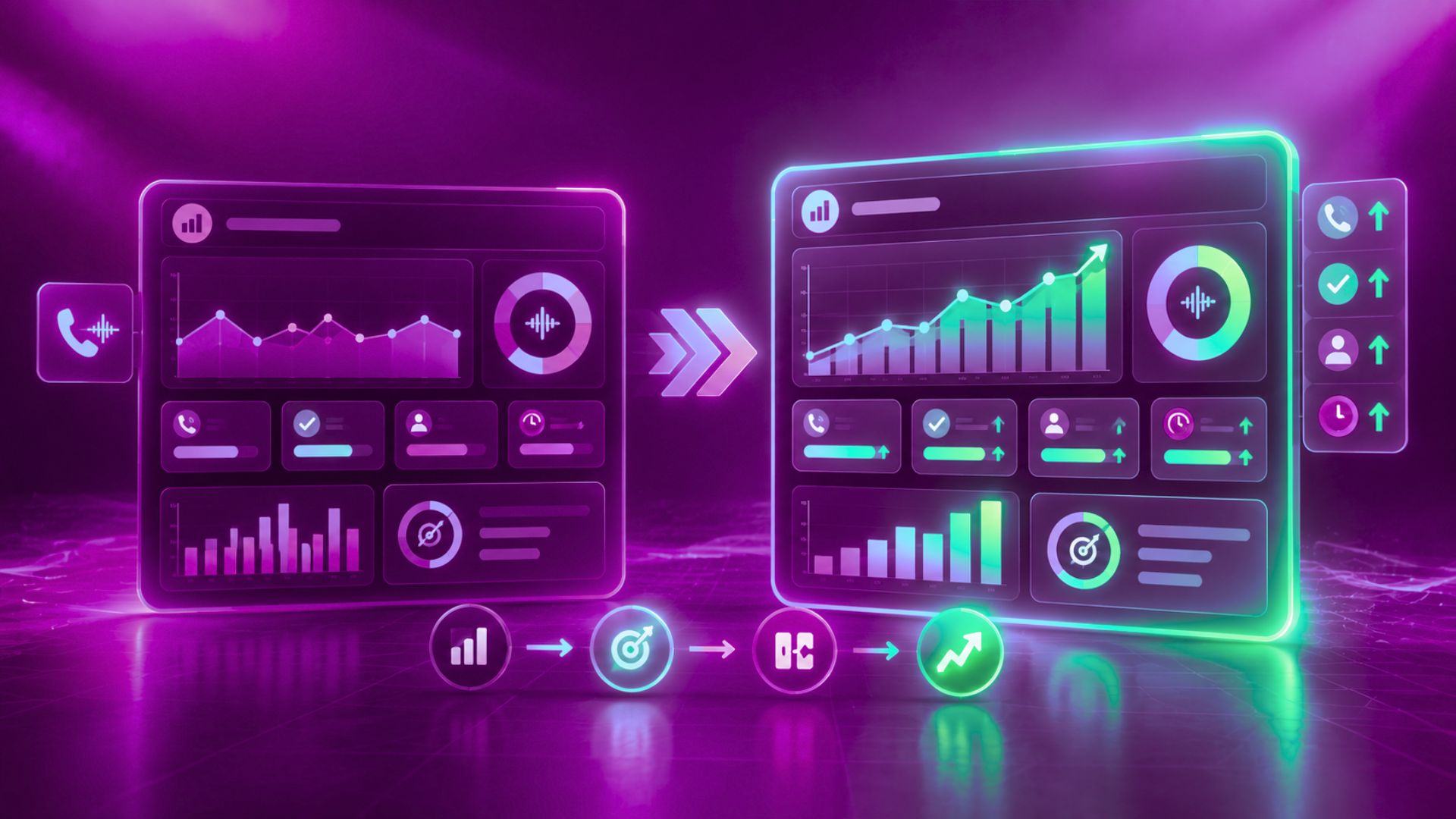
After collecting sufficient data, compare the pilot against the existing process.
Look beyond a single metric. For example, a higher call completion rate may not be meaningful if customer satisfaction or qualified-lead rates decline.
Consider the complete picture:
Operational efficiency + conversation quality + customer outcomes + business results = pilot performance.
Document both improvements and limitations. A pilot that exposes problems is still useful because those findings can prevent costly issues during deployment.
**Step 7: Refine Before Scaling**
Use pilot findings to improve scripts, workflows, escalation rules, integrations, and reporting.
At this stage, businesses using platforms such as Callified AI can focus on refining their AI calling processes around the specific use cases that demonstrate practical value.
Do not automatically scale because the pilot produced positive results. First confirm that the system can handle a larger volume without reducing conversation quality or creating operational bottlenecks.
Also watch this video - ***[Meet Callified AI | Your AI Sales Team That Never Sleeps](https://youtu.be/cQ8QsephGKI?si=zPMCc1XGaWJJboY2)***
**Conclusion**
A successful pilot is less about proving that AI can make calls and more about discovering how the technology fits into a real business operation. Starting with a focused use case, measurable goals, controlled testing, human feedback, and a clear baseline creates a practical foundation for expansion. The ***[AI Calling Pilot](https://callified.ai/blog/ai-calling-pilot-validate/)*** should ultimately produce actionable evidence: what works, what needs improvement, and what conditions are required for successful deployment.
**FAQs**
Q1. How long should a calling pilot run?
The duration depends on call volume and the complexity of the use case. The pilot should continue long enough to collect meaningful performance data rather than ending after only a few interactions.
Q2. How many calls should be tested?
There is no universal number. The sample should be large enough to reveal recurring patterns across different customer responses, call outcomes, and operating conditions.
Q3. What is the most important pilot metric?
There is no single metric that applies to every business. Choose metrics connected directly to the pilot's objective, while also monitoring quality, customer outcomes, and operational performance.