How Can Real Estate Ads Help Property Businesses Attract More Qualified Buyers?
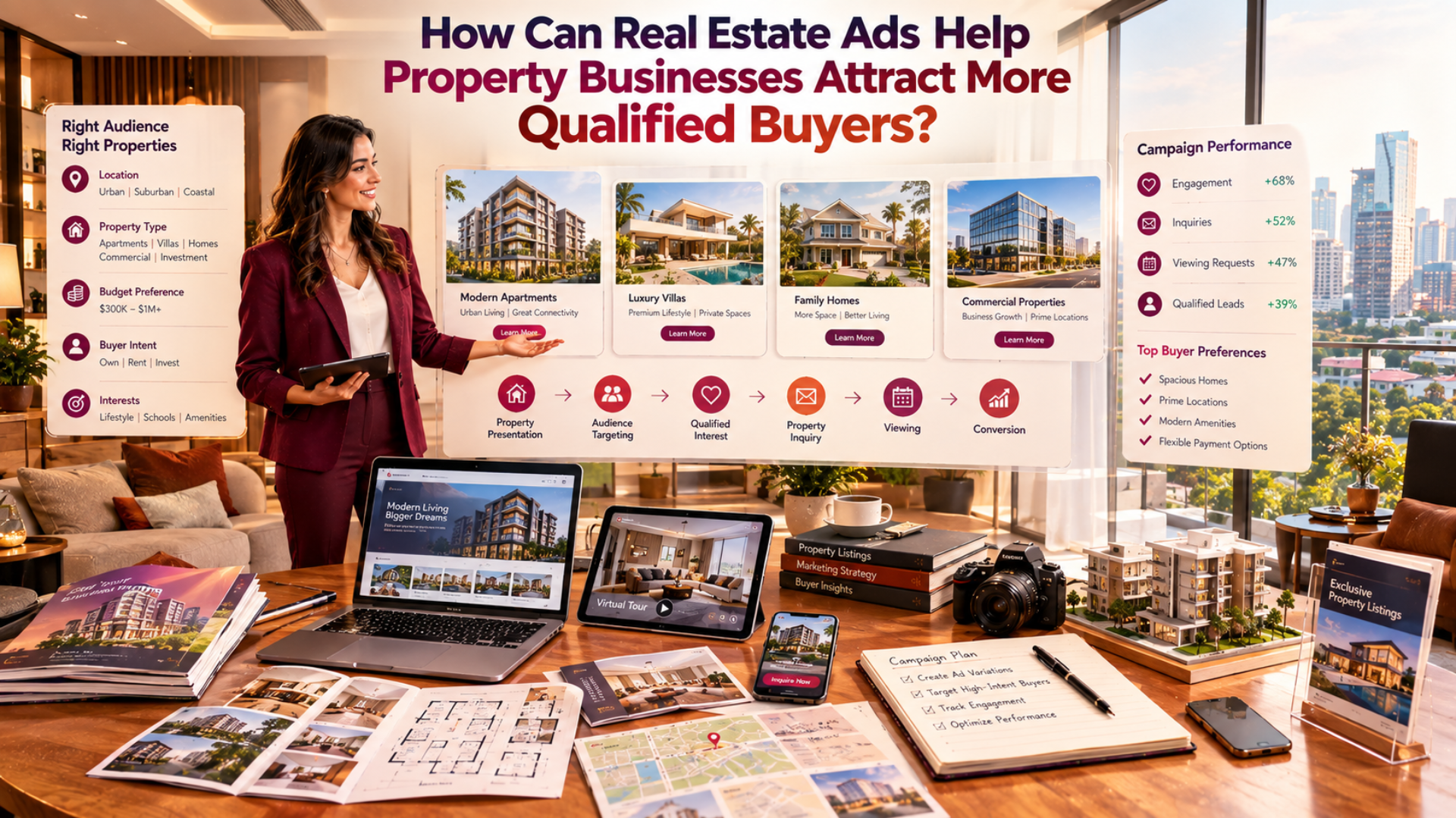
Searching for a home, apartment, commercial property, or investment opportunity often begins online. But with countless listings competing for attention, how can property businesses make their campaigns stand out? Effective property campaigns combine compelling property presentation, accurate targeting, strong messaging, and continuous performance analysis to connect the right properties with interested buyers.
What Makes a Real Estate Advertisement Effective?
Successful property campaign ***[real estate ads](https://adsgpt.io/blog/future-real-estate-ads-case-study/
)*** do more than display beautiful photos. It gives potential buyers a clear reason to explore the listing further.
Strong campaigns typically include:
* High-quality property photography or video
* Clear pricing and important property details
* A compelling headline and description
* Location-specific messaging
* A strong call to action
* Mobile-friendly creative formats
* Accurate information that builds trust
The goal is to reduce uncertainty while encouraging the viewer to take the next step, such as requesting details, scheduling a viewing, calling an agent, or submitting an inquiry.
How Can Property Marketing Capture Attention Quickly?
Real estate buyers often scroll through numerous listings before deciding which ones deserve attention. The first few seconds of an advertisement therefore matter considerably.
Instead of relying only on generic phrases such as “beautiful property” or “great investment,” marketers can highlight specific benefits. A family apartment might emphasize nearby schools, spacious rooms, and convenience, while a commercial property could focus on accessibility, business potential, parking, and surrounding infrastructure.
Visual storytelling can make these differences easier to understand. Short property tours, neighborhood videos, floor-plan animations, lifestyle imagery, and before-and-after renovation visuals can all give prospects a stronger impression of what the property offers.
How Can AI for real estate marketing Improve Campaign Efficiency?
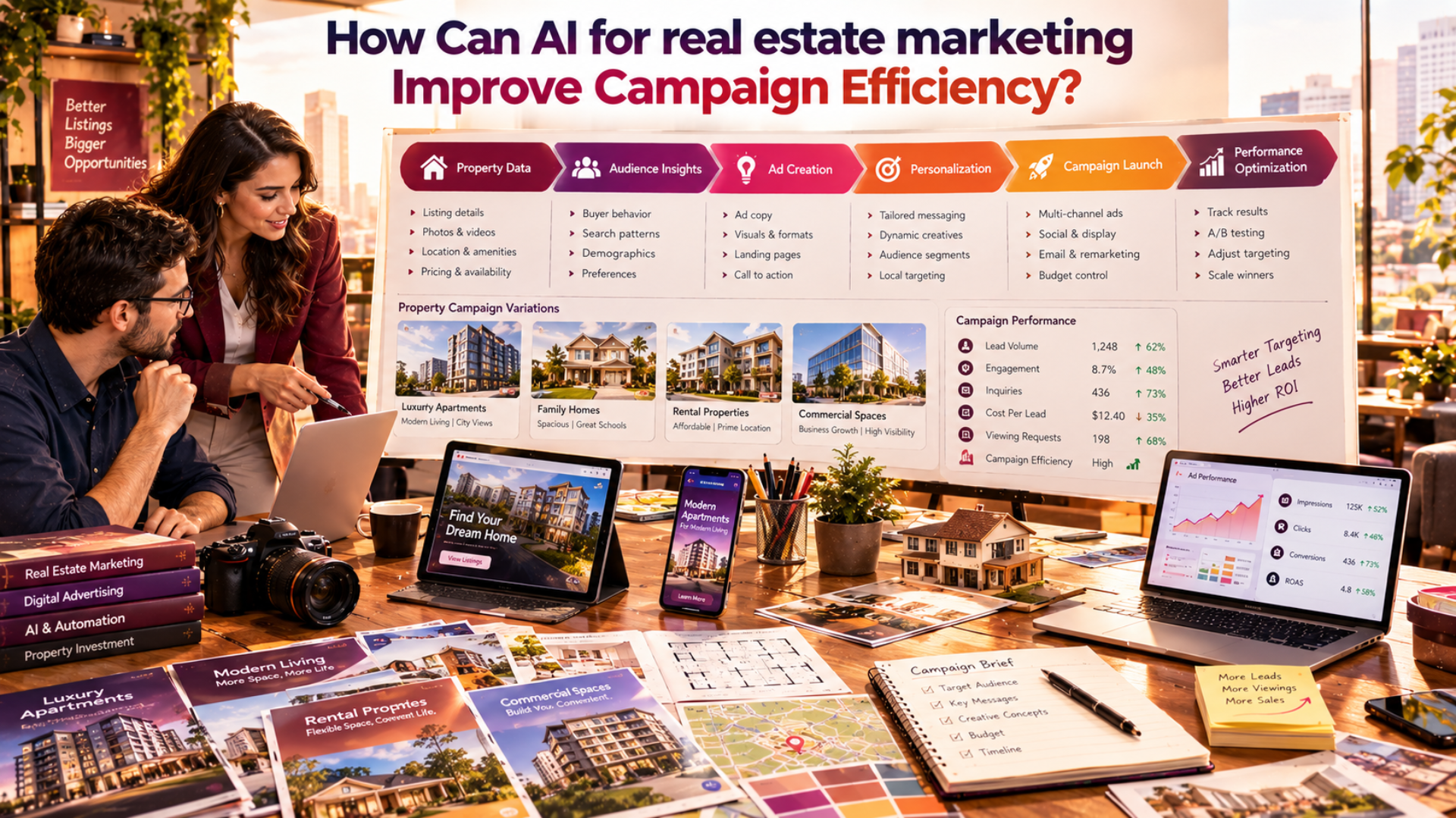
Modern property marketing increasingly involves large amounts of information, including listing details, audience behavior, creative performance, inquiries, and conversion data. ***[AI for real estate marketing](https://adsgpt.io/blog/ai-for-real-estate-marketing/
)*** can help teams organize and analyze these signals more efficiently.
For example, AI-supported tools can assist with:
1. Identifying patterns in campaign engagement.
2. Generating variations of advertising copy.
3. Personalizing messages for different buyer segments.
4. Analyzing which creative formats attract more attention.
5. Predicting which audiences may respond to particular property types.
6. Automating repetitive marketing tasks.
However, automation should support rather than replace professional judgment. Property information must remain accurate, messaging should reflect the actual listing, and marketers should review AI-generated material before publication.
Which Audiences Should Property Advertisers Target?
Not every property appeals to the same type of buyer. A major advantage of digital advertising is the ability to develop campaigns around specific customer needs instead of presenting identical messages to everyone.
Possible audience groups include:
* First-time homebuyers
* Families looking for larger homes
* Luxury property buyers
* Rental seekers
* Commercial property investors
* Relocation customers
* Real estate investors
* Buyers searching in specific neighborhoods
Audience segmentation allows marketers to adjust creative direction, messaging, offers, and calls to action according to the likely needs of each group.
For example, an advertisement aimed at investors might emphasize rental potential and market positioning, while a campaign aimed at families could focus on space, amenities, transportation, and neighborhood convenience.
How Can Property Ads Generate Better Leads?

Generating thousands of clicks does not necessarily mean a campaign is successful. Property marketers should focus on attracting people who are genuinely interested and capable of taking the next step.
A stronger lead-generation approach can include:
* Dedicated landing pages for individual properties
* Simple inquiry forms
* Click-to-call options
* Appointment scheduling
* Virtual viewing requests
* Downloadable property brochures
* Clear location and pricing information
* Fast follow-up after inquiries
The message shown in the advertisement should also match the landing-page experience. If an advertisement promotes a luxury apartment but sends users to a generic property page, potential buyers may lose interest.
How Can Creative Testing Improve Advertising Results?
Even an attractive property campaign may underperform if its creative approach does not connect with the intended audience. Testing different elements helps marketers understand what actually influences engagement and inquiries.
Teams can experiment with:
* Property images versus video tours
* Lifestyle-focused versus feature-focused headlines
* Different calls to action
* Short versus detailed descriptions
* Interior versus exterior imagery
* Local neighborhood messaging
* Different audience segments
Performance should be evaluated using meaningful indicators rather than clicks alone. Leads, qualified inquiries, viewing requests, conversion rates, cost per lead, and eventual sales can provide a more useful picture of campaign effectiveness.
How Can Target Audience Insights Strengthen Long-Term Campaigns?
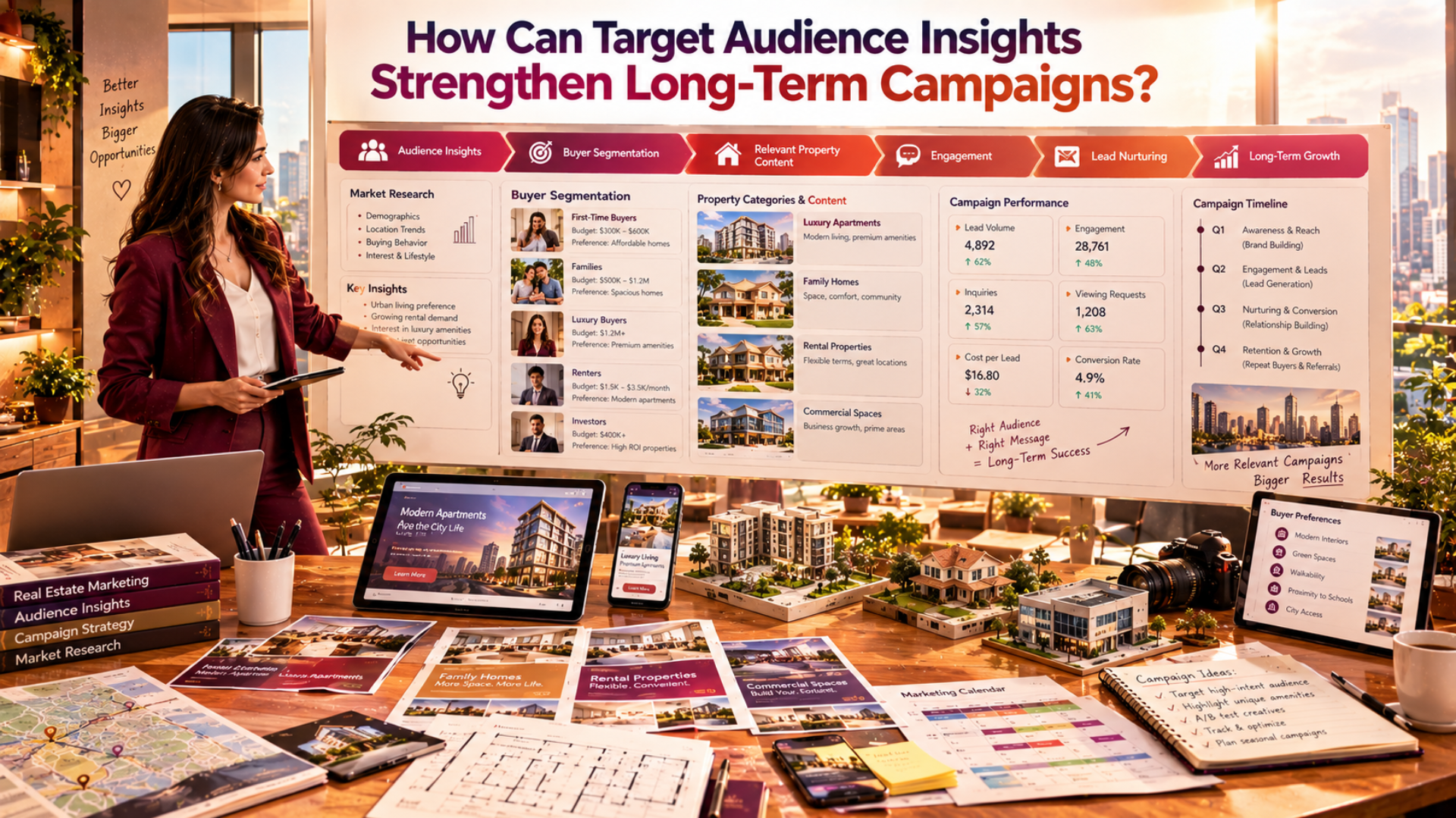
Understanding the ***[target audience](https://medium.com/@AdGenie/what-are-the-best-methods-to-research-your-target-audience-e7cf403769ac
)*** allows property businesses to build campaigns around real customer motivations rather than assumptions. Search behavior, previous interactions, content engagement, geographic interests, and inquiry patterns can reveal what different prospects actually value.
A useful strategy is to create several buyer-focused campaign journeys. Someone exploring affordable apartments may need educational content and financing information, while an experienced investor may respond better to market data, property comparisons, and investment-oriented messaging.
The strongest campaigns therefore connect audience insight with relevant property information at every stage of the buying journey.
How Should Marketers Use Data to Refine Campaigns?
Data becomes valuable when it leads to better decisions. If one property creative receives strong engagement but produces few inquiries, the issue may be the landing page, pricing, audience selection, or offer rather than the advertisement itself.
Marketers should regularly compare campaign results and ask:
* Which properties attract the most qualified leads?
* Which audiences respond most consistently?
* Which creative formats produce inquiries?
* Where are potential customers dropping off?
* Which campaigns generate affordable leads?
* Which messages result in actual appointments?
This approach turns advertising from a one-time promotional activity into an ongoing optimization process.
What Should Businesses Avoid in Property Advertising?
Trust is particularly important when promoting high-value purchases. Overstated claims, misleading imagery, unclear pricing, or inaccurate property information can damage credibility and waste advertising budgets.
Businesses should avoid:
* Using outdated property photographs
* Hiding important costs
* Making unsupported investment claims
* Targeting audiences too broadly
* Using repetitive creative indefinitely
* Ignoring poor-quality leads
* Delaying responses to inquiries
* Publishing unverified AI-generated information
Transparency can make campaigns more credible while helping prospective buyers make informed decisions.
To know more click on: ***[Manage All Your Meta Ads in One Dashboard](https://youtu.be/JNi9shpbejY?si=fsnp_g-iqxfrIzBv
)***
Summary
Effective ***[real estate ads](https://adsgpt.io/blog/future-real-estate-ads-case-study/
)*** are built around relevance, clarity, strong visuals, accurate information, and measurable outcomes. Property businesses can improve campaign performance by segmenting audiences, testing creative formats, using intelligent marketing tools, strengthening landing pages, and continuously analyzing lead quality. The ultimate goal is not simply to generate attention, but to turn qualified interest into meaningful property conversations and conversions.
FAQs
What should a real estate advertisement include?
It should generally include strong visuals, property details, location, pricing when appropriate, key benefits, and a clear call to action.
How can property businesses get better advertising leads?
Better targeting, audience-specific messaging, dedicated landing pages, creative testing, and fast follow-up can help improve lead quality.
Can AI help with property advertising?
Yes. AI can assist with audience analysis, content variations, campaign optimization, personalization, and repetitive marketing workflows, provided humans review the output.
Why is audience targeting important for property campaigns?
Different buyers have different needs. Targeting helps businesses present relevant properties and messages to people who are more likely to engage or inquire.
Which metrics should real estate marketers track?
Useful metrics include qualified leads, inquiries, conversion rate, cost per lead, appointment requests, engagement, and ultimately property sales or rentals.