# Common Mistakes in AI Dialer Scripts and How to Avoid Them?
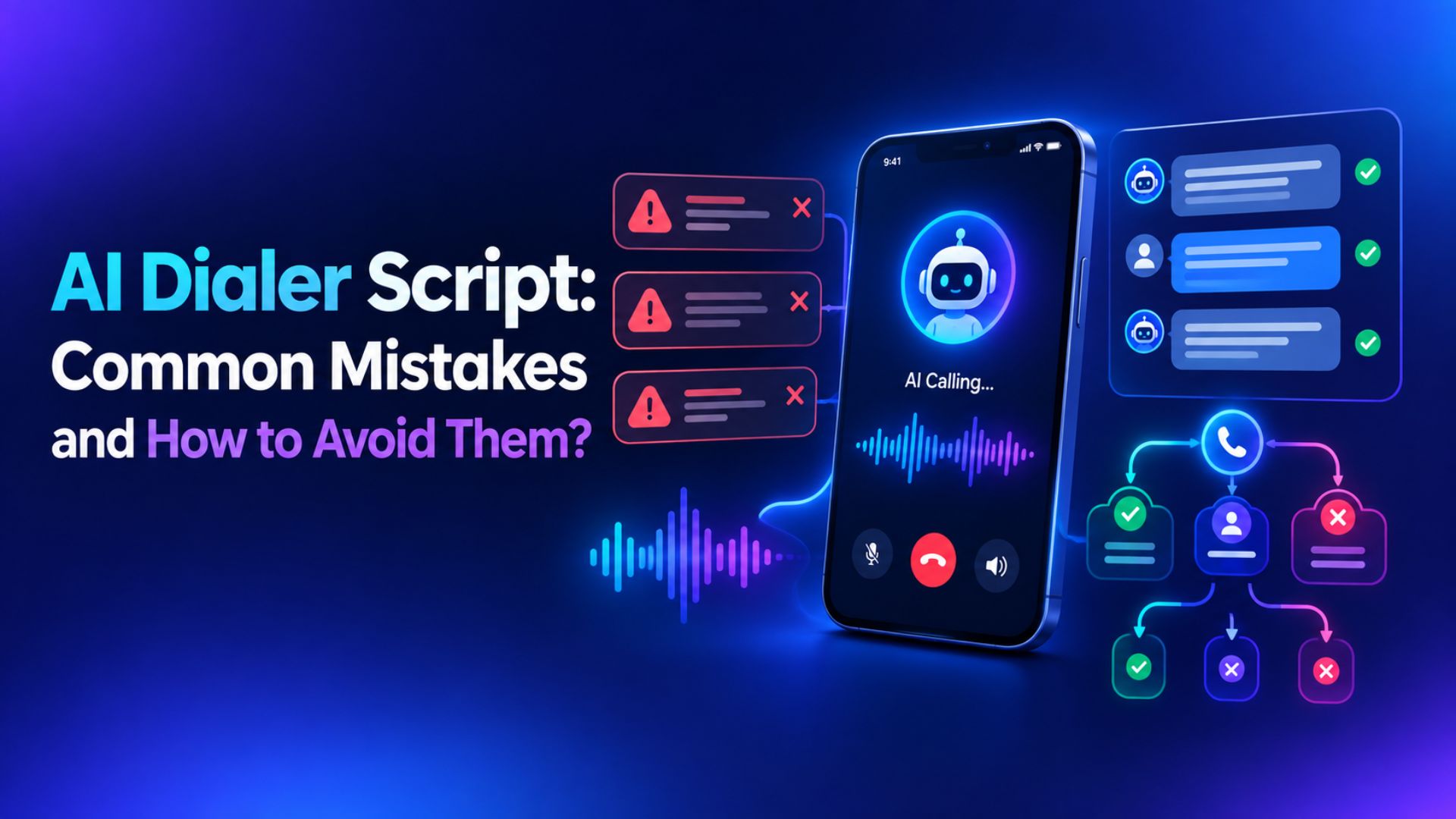
What makes an automated sales call feel helpful rather than robotic? The answer often comes down to how the conversation is planned. An ***[AI Dialer Script](https://callified.ai/blog/ai-dialer-script-killing-campaigns/)*** should guide an AI-powered calling system through a natural conversation while giving it enough flexibility to respond to different customer situations.
The most common mistakes include overly rigid wording, unclear goals, weak personalization, poor objection handling, and complicated conversation flows. Avoiding these problems can make automated calls more relevant, consistent, and easier for prospects to engage with.
A well-designed script should not force the AI to repeat the same sentences regardless of what a prospect says. Instead, it should define the purpose of the call, likely conversation paths, qualifying questions, responses to common objections, and appropriate next steps.
**What Makes an Effective Automated Calling Script?**
A strong script combines structure with conversational flexibility. Before writing individual lines, businesses should establish what the call is supposed to accomplish.
For example, the objective could be:
* Qualifying a new lead
* Scheduling a sales appointment
* Following up with an existing prospect
* Confirming customer information
* Collecting feedback
* Re-engaging inactive leads
Once the objective is clear, the conversation becomes easier to organize. Each section should support that specific goal rather than introducing unnecessary information.
Personalization is also important. Instead of relying only on a prospect's name, the conversation can use relevant details such as their industry, previous interaction, selected service, or reason for inquiry.
**Mistake 1: Making the Conversation Too Robotic**
One of the biggest problems is writing a script that sounds like a traditional sales pitch.
Long introductions, repeated promotional statements, and unnatural transitions can quickly make a call feel automated. Customers generally respond better when the conversation moves naturally.
**How to avoid it**
Use short sentences and everyday language. Give the system multiple ways to respond depending on the customer's answer.
For example, instead of creating one fixed response after every question, prepare several relevant branches for positive responses, negative responses, uncertainty, and requests for more information.
The goal is not to eliminate structure. It is to make the structure flexible enough to support realistic conversations.
**Mistake 2: Ignoring Customer Intent**
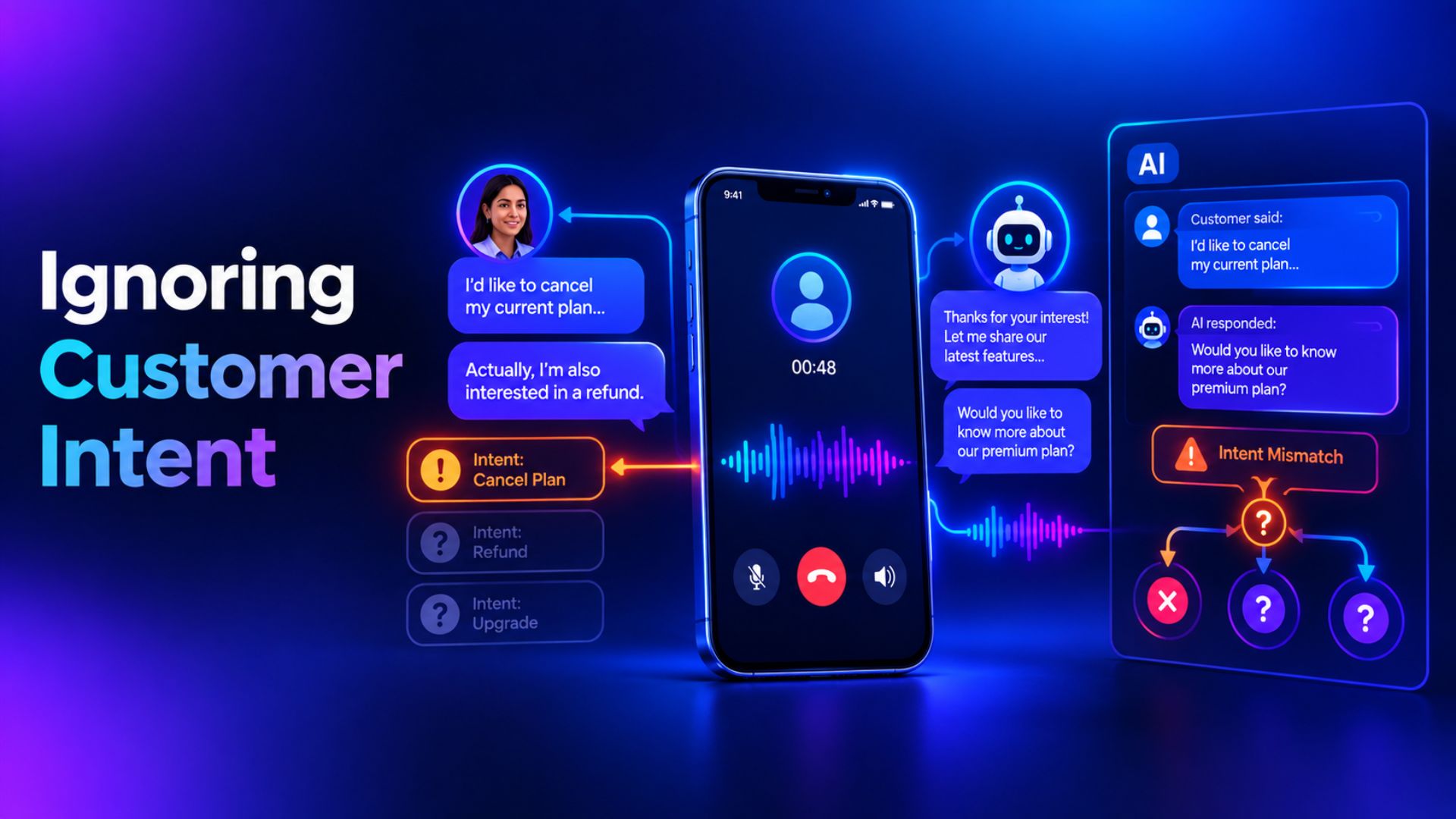
A script can fail when it focuses entirely on what the business wants to say rather than what the customer is communicating.
An ***[AI dialer](https://callified.ai/blog/bad-lead-data-kills-ai-dialer-campaign/)*** should be supported by conversation paths that recognize different customer intents. Someone who wants pricing should not receive the same response as someone who wants a product demonstration.
**How to avoid it**
Create intent-based responses for situations such as:
* The customer is interested.
* The customer needs more information.
* The customer is not interested.
* The customer has an objection.
* The customer asks an unexpected question.
* The customer wants to speak with a human representative.
*
This approach creates a more responsive experience and prevents conversations from becoming repetitive.
**Mistake 3: Using Weak Qualification Questions**
Asking too many questions can make prospects feel like they are completing a survey. Asking too few can leave sales teams without useful information.
The solution is to focus on questions that directly support qualification or the next stage of the sales process.
Useful questions might explore:
* Current challenges
* Existing solutions
* Business requirements
* Expected timeline
* Team size or use case
* Interest in a demonstration
Each question should have a clear purpose. If the answer will not affect the next step, consider removing the question.
**Mistake 4: Forgetting Objection Handling**
Customers may raise concerns about price, timing, competitors, existing providers, or the need for a particular solution. A script that does not prepare for these situations can create awkward conversations.
**How to avoid it**
Build separate response paths for common objections. The AI should acknowledge the concern first instead of immediately pushing another sales statement.
For example, when a prospect says they are not ready, the conversation could acknowledge their timing and offer a low-pressure follow-up option rather than repeatedly asking for a meeting.
This makes the interaction feel more respectful and gives prospects control over the conversation.
**Mistake 5: Making Every Call Follow the Same Path**
Different leads have different needs. Treating every prospect identically can reduce the usefulness of automated outreach.
A better approach is to create branching logic. The conversation should change based on answers, intent, engagement level, and previous interactions.
Businesses using platforms such as Callified AI can use this structured approach to build calling workflows around specific sales and customer communication requirements.
**Mistake 6: Overloading the Script With Information**
Another common mistake is trying to explain everything during the first call. Too much information can make conversations longer and harder to follow.
A better script prioritizes the information needed for the immediate objective. Additional details can be provided through follow-up emails, sales representatives, demonstrations, or later conversations.
Keep the opening focused, establish relevance quickly, and move toward a clear next action.
**Mistake 7: Failing to Measure and Improve Results**
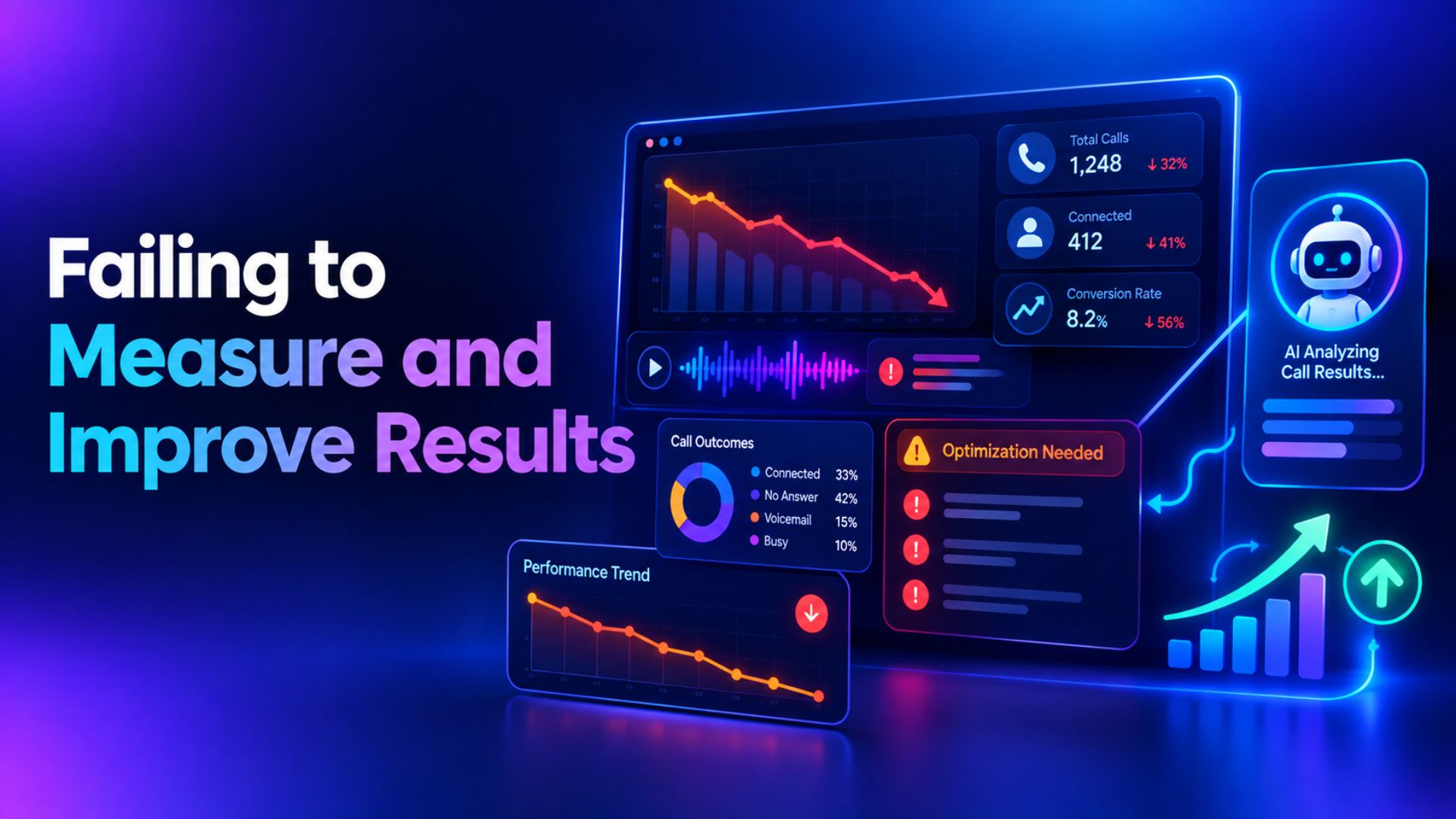
A script should not be treated as a finished document. Call performance can reveal where prospects are losing interest, asking unexpected questions, or abandoning conversations.
Businesses can monitor metrics such as:
* Call completion rates
* Conversation duration
* Qualified lead rates
* Appointment bookings
* Transfer rates
* Common objections
* Follow-up requests
These insights can reveal which parts of the conversation need improvement.
**Why Continuous Optimization Matters**
The first version of a script rarely performs perfectly. Customer responses can reveal gaps that were impossible to identify during planning.
For example, if prospects repeatedly ask a question that the script does not address, that question can become a new conversation branch. If customers frequently disconnect during a particular section, that part may need to be shortened or repositioned.
Tracking ***[AI Dialer ROI](https://6a460ca630e75.site123.me/blog/what-does-a-good-ai-dialer-roi-actually-look-like)*** alongside call quality can also help businesses understand whether script improvements are contributing to meaningful business outcomes rather than simply increasing call volume.
**How to Build a Better Script Step by Step**
A practical process can make script development easier:
* Define one primary objective: Decide what the call should accomplish.
* Identify the target audience: Understand their needs, concerns, and likely questions.
* Create the opening: Keep the introduction brief and relevant.
* Add qualification questions: Ask only questions that support the objective.
* Map conversation branches: Prepare responses for different customer intents.
* Include objection handling: Address realistic concerns without sounding argumentative.
* Define the next action: Make it clear whether the call should schedule, transfer, follow up, or close.
* Review real call data: Continuously improve weak sections based on actual interactions.
Also watch this video - ***[Meet Callified AI | Your AI Sales Team That Never Sleeps](https://youtu.be/cQ8QsephGKI?si=zPMCc1XGaWJJboY2)***
**Conclusion**
Successful automated calling depends on more than simply putting words into a script. The conversation needs a clear objective, natural language, useful qualification questions, flexible branches, thoughtful objection handling, and continuous performance improvement.
A well-planned ***[AI Dialer Script](https://callified.ai/blog/ai-dialer-script-killing-campaigns/)*** should guide the conversation without making it feel mechanical. By analyzing real customer interactions and refining weak sections over time, businesses can create automated calls that are more relevant, consistent, and aligned with their sales or customer service goals.
**FAQs**
Q1. What is the biggest mistake in an automated calling script?
Making the conversation too rigid is one of the most common problems. Automated calls should have clear structure while allowing different responses based on customer intent.
Q2. How long should a calling script be?
There is no universal word count. It should contain enough guidance to support the objective without forcing the AI to deliver unnecessary information.
Q3. Should every prospect receive the same script?
The core framework can remain consistent, but conversation branches should adapt to customer needs, responses, and intent.
Q4. How often should a script be updated?
Review performance regularly and update it whenever call data reveals recurring objections, unanswered questions, weak conversion points, or unnecessary conversation steps.