# How to Get Better Results From AI Outbound Calling?
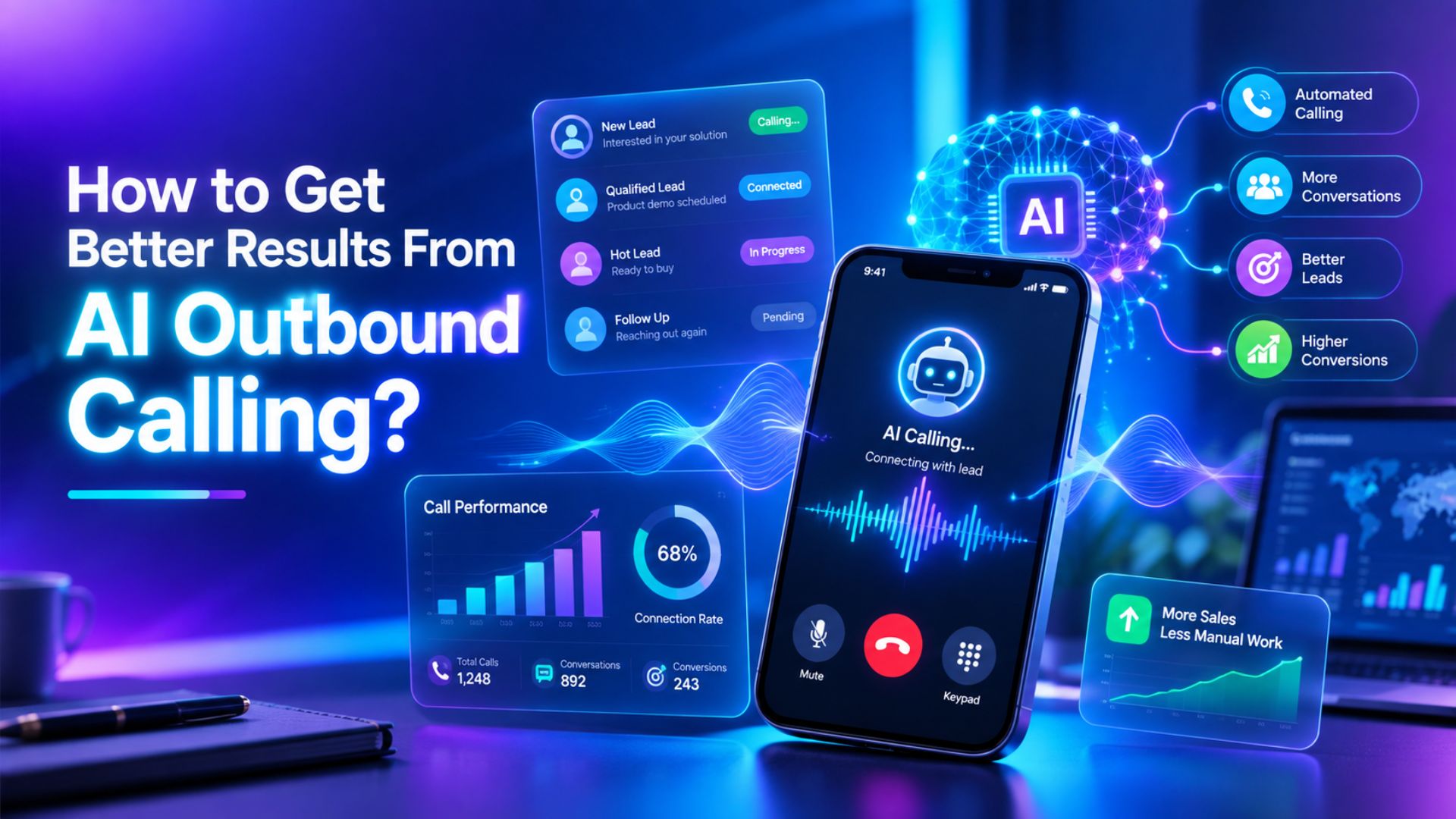
What makes an AI-powered calling strategy actually generate better conversations, qualified leads, and conversions? Is simply automating calls enough, or does success depend on how the system is planned, scripted, monitored, and optimized?
The short answer is no. Better results come from combining accurate targeting, natural conversations, relevant scripts, smart follow-ups, and continuous performance analysis. ***[AI Outbound Calling](https://callified.ai/blog/ai-outbound-calling-failures/)*** works most effectively when automation supports a clearly defined sales process rather than replacing strategy altogether.
Businesses can improve performance by focusing on five areas: audience quality, conversation design, personalization, timing, and measurable optimization.
**What Makes an AI Calling Strategy Effective?**
Automation can increase calling capacity, but more calls do not automatically mean better results. The quality of each interaction still matters.
An effective AI calling strategy should:
* Contact the right prospects
* Use relevant conversation flows
* Deliver a clear and natural message
* Handle common questions accurately
* Identify qualified opportunities
* Record useful interaction data
* Trigger appropriate follow-ups
The goal is to create a consistent process that can engage prospects without making conversations feel repetitive or irrelevant.
**1. Start With a Clearly Defined Target Audience**
One of the biggest mistakes businesses make is automating outreach before deciding exactly who they want to reach.
Start by defining your ideal customer profile. Consider factors such as:
* Industry
* Company size
* Job role
* Location
* Purchase intent
* Existing relationship
* Common business challenges
A focused audience gives the calling system better context and helps create more relevant conversations.
Instead of delivering the same message to every contact, create different call flows for different customer segments. A decision-maker at a large company may need a different conversation from a small-business owner evaluating a new solution.
**2. Build Conversation Scripts Around Customer Intent**
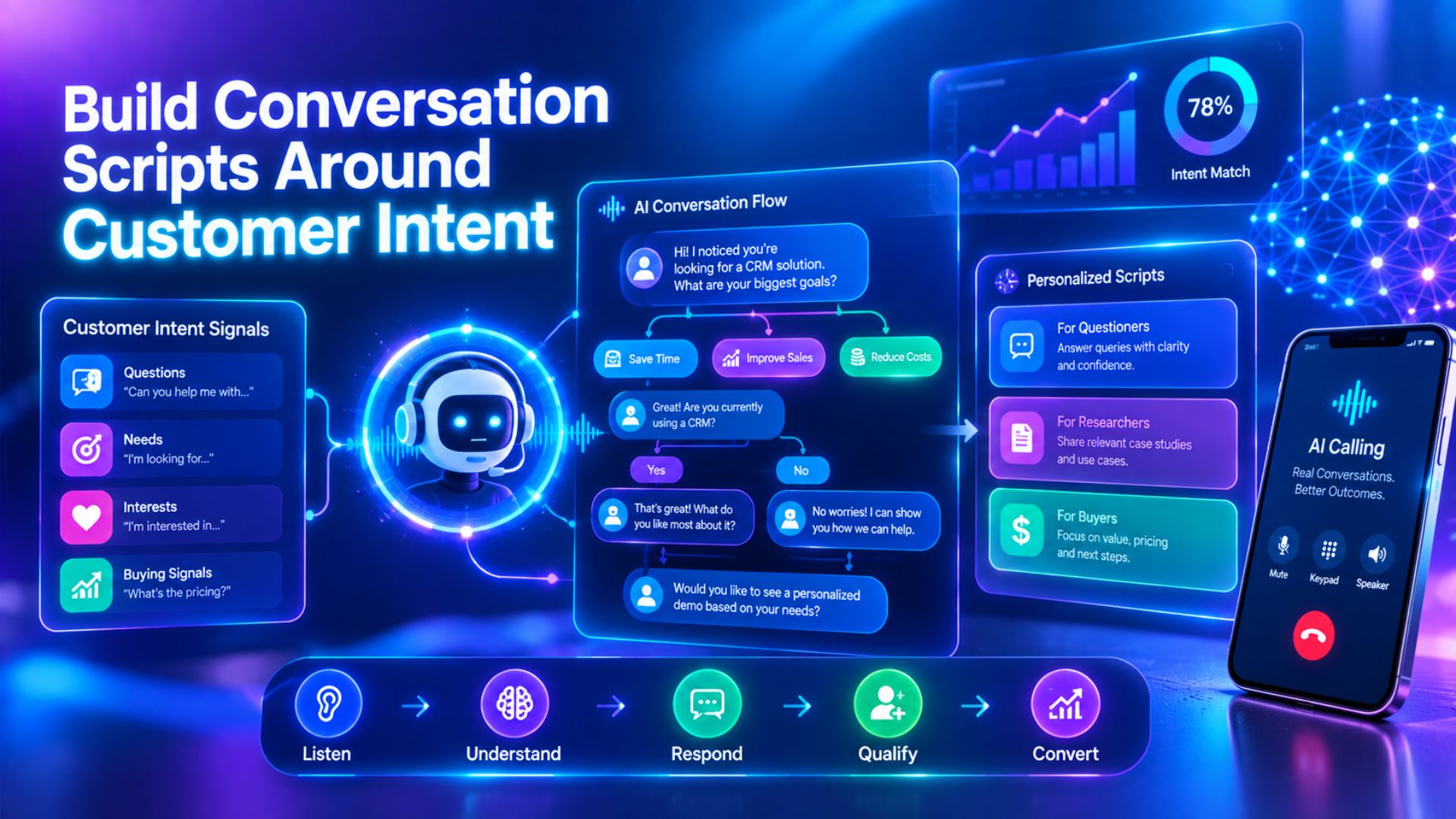
A strong script should guide a conversation without making it sound robotic.
Avoid writing long paragraphs that the system simply reads word for word. Instead, build flexible conversation paths around likely customer responses.
For example, a sales conversation might include:
* A concise introduction
* A reason for the call
* A qualifying question
* A response based on the prospect's answer
* A relevant value proposition
* A next-step question
This structure gives the conversation direction while leaving room for natural interaction.
Businesses using platforms such as Callified AI can also structure calling workflows around specific outreach objectives, qualification requirements, and follow-up processes.
**3. Personalize the Opening Message**
The first few seconds can determine whether a prospect continues listening.
A personalized opening should communicate why the call is relevant without overwhelming the listener. Use available customer information carefully and avoid unnecessary details.
For example, instead of beginning with a generic product pitch, the conversation can reference a relevant business need or reason for contacting the prospect.
Personalization can improve engagement because the prospect immediately understands the purpose of the conversation.
**4. Improve Lead Qualification**
Automated calling becomes more valuable when it does more than initiate conversations.
Create qualification criteria that help identify whether a prospect is worth pursuing. Depending on the business, these criteria could include:
* Current solution
* Budget range
* Business requirements
* Purchase timeline
* Decision-making authority
* Specific pain points
This helps sales teams spend more time on conversations that meet their predefined criteria.
The system can also categorize outcomes such as interested, not interested, follow-up required, wrong contact, or qualified opportunity.
**5. Optimize Timing and Follow-Ups**
Even a well-designed conversation can perform poorly if the timing is wrong.
Analyze when prospects are most responsive and adjust calling schedules accordingly. Instead of treating every contact identically, consider customer location, working hours, previous interaction history, and campaign objectives.
Follow-ups should also have a clear purpose. A prospect who requested more information should receive a different follow-up from someone who was unavailable during the first call.
For ***[outbound sales](https://callified.ai/blog/what-is-outbound-sales-and-how-does-it-work/)***, this structured approach can help maintain consistency while reducing the amount of manual coordination required from sales teams.
**6. Track the Metrics That Actually Matter**
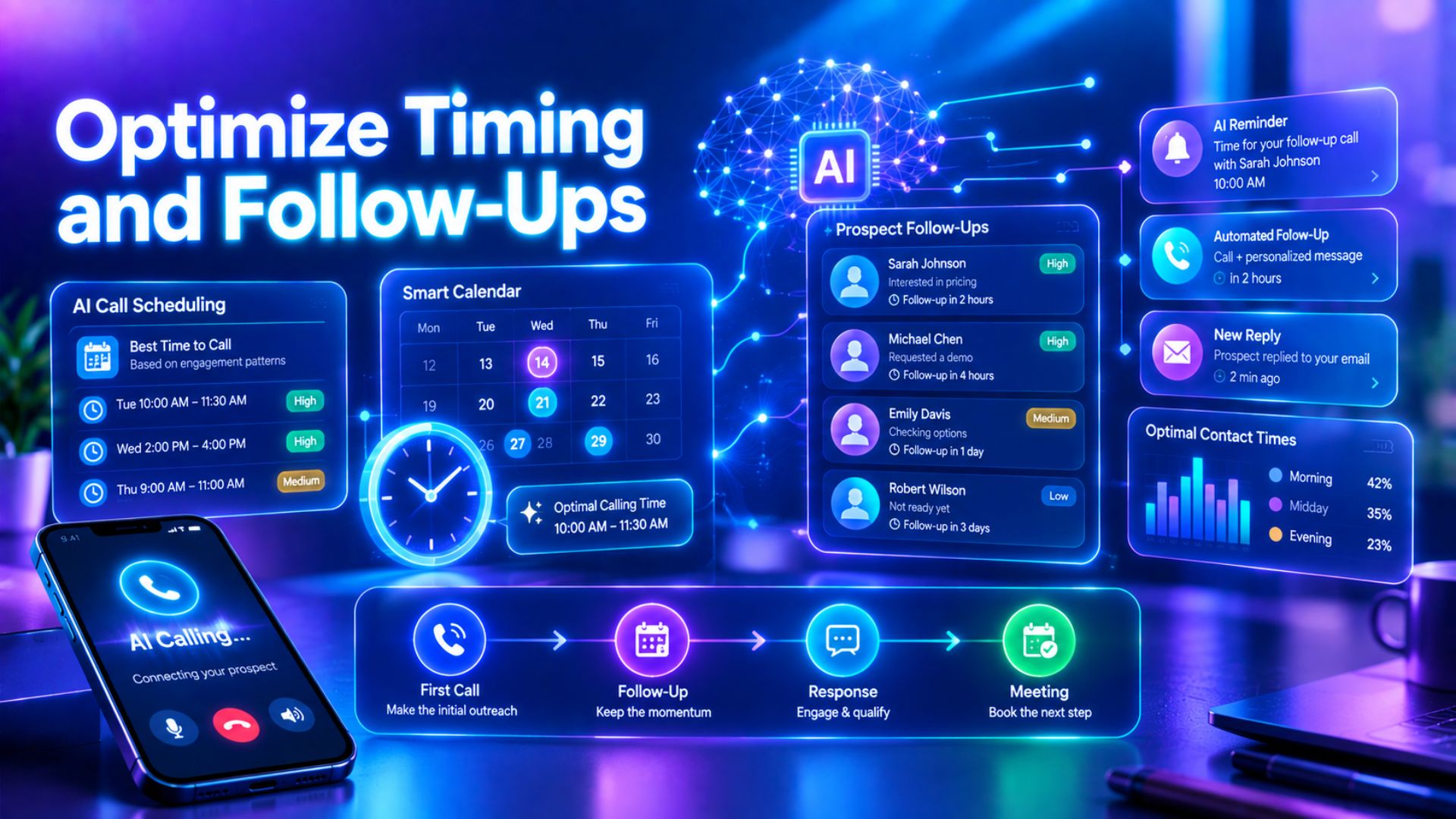
Call volume alone is not a reliable measure of campaign success.
Track metrics that show whether conversations are producing meaningful business outcomes.
Important measurements include:
* Connection rate
* Conversation rate
* Qualification rate
* Appointment booking rate
* Follow-up completion rate
* Conversion rate
* Average call duration
* Drop-off points
* Cost per qualified lead
Review these metrics regularly rather than waiting until the end of a campaign.
For example, if connection rates are high but appointment bookings remain low, the problem may be the conversation structure, offer, qualification process, or call-to-action rather than the calling technology itself.
**7. Test and Improve Your Scripts Continuously**
There is rarely one perfect script for every audience.
Test different openings, questions, value propositions, and calls to action. Keep changes controlled so that performance differences can be identified more easily.
You can experiment with:
* Short versus detailed introductions
* Different qualification questions
* Alternative value propositions
* Different follow-up intervals
* Multiple calls to action
Use actual performance data to determine which approaches deserve further testing.
**8. Make the Handoff to Human Teams Seamless**
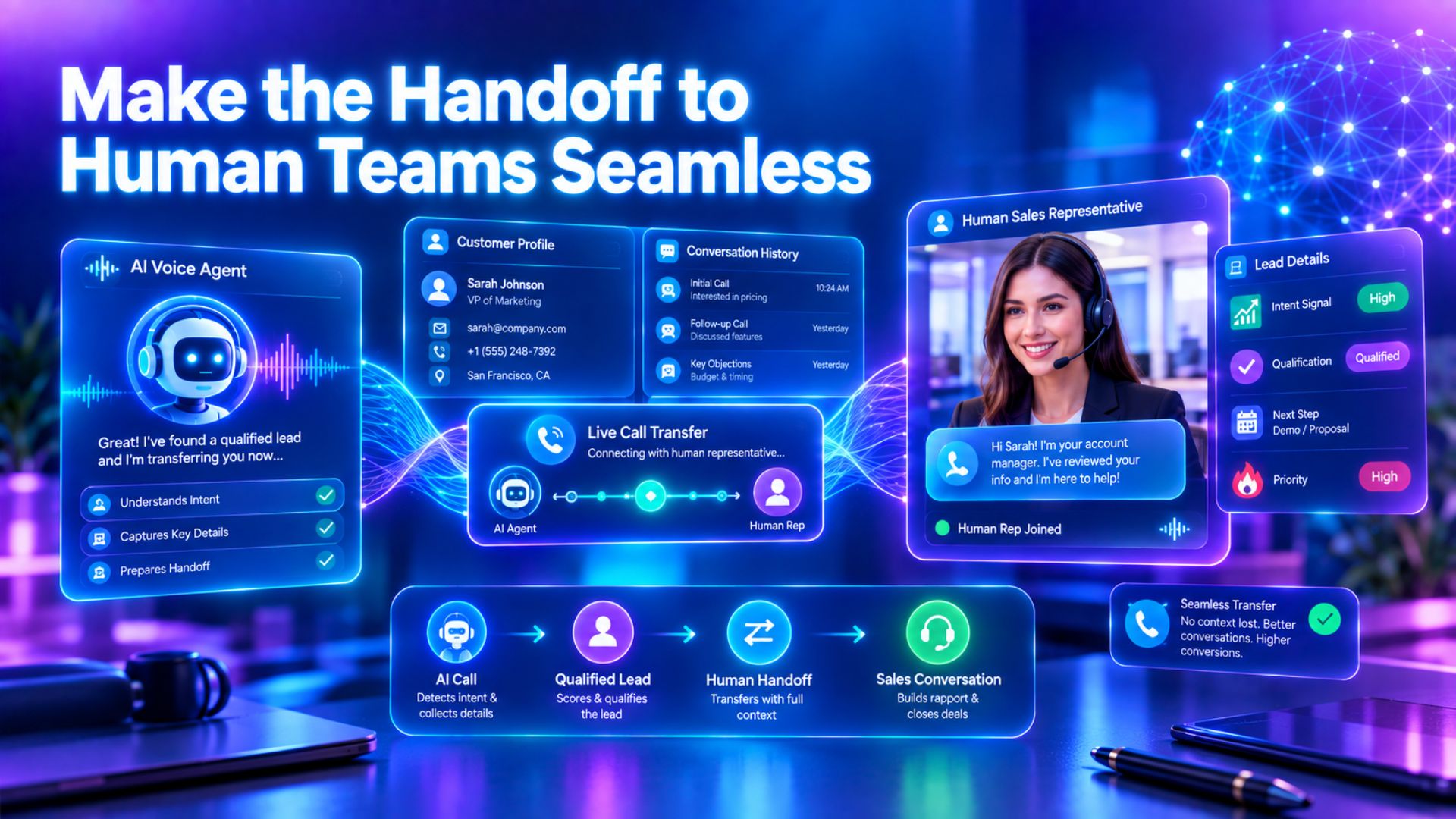
Automation should not create unnecessary friction when human involvement becomes necessary.
Define clear handoff conditions. For example, a conversation may be transferred when a prospect:
* Requests a human representative
* Shows strong buying intent
* Has a complex technical question
* Wants pricing information
* Is ready to schedule a meeting
This creates a more connected experience because automation handles repetitive interactions while human representatives can focus on situations requiring judgment or deeper discussion.
**9. Use Conversation Data to Improve Future Campaigns**
Every interaction can provide useful information.
Review call outcomes and recurring questions to discover patterns. Prospects may repeatedly ask about pricing, implementation, integrations, contract terms, or specific features.
These insights can be used to improve scripts, landing pages, sales materials, FAQs, and future campaigns.
When businesses analyze their ***[outbound sales calls](https://logcla.com/blogs/1753267/Why-Outbound-Sales-Calls-Still-Win-in-a-Digital-First)*** rather than treating each interaction as an isolated event, they can identify recurring objections and opportunities for improvement.
**10. Keep the Customer Experience at the Center**
The ultimate goal is not simply to automate more calls. It is to create useful conversations that respect the prospect's time.
Avoid overly aggressive messaging, excessive follow-ups, unclear disclosures, or irrelevant pitches. Make it easy for prospects to understand why they are being contacted and what happens next.
A thoughtful customer experience can make automated outreach feel more relevant and professional.
Also watch this video - ***[Meet Callified AI | Your AI Sales Team That Never Sleeps](https://youtu.be/cQ8QsephGKI?si=zPMCc1XGaWJJboY2)***
**Conclusion**
Getting better results from ***[AI Outbound Calling](https://callified.ai/blog/ai-outbound-calling-failures/)*** requires more than increasing the number of automated conversations. The strongest results come from combining precise targeting, natural scripts, personalization, intelligent qualification, timely follow-ups, and continuous measurement.
When every interaction is treated as a source of useful data, businesses can steadily improve their campaigns while giving sales teams better opportunities to focus on qualified prospects.
**Frequently Asked Questions**
Q1. How can automated calling improve sales performance?
It can increase outreach capacity, maintain consistent messaging, automate qualification, organize follow-ups, and provide structured interaction data for sales teams.
Q2. What should an automated calling script include?
A good script should include a concise opening, clear purpose, relevant questions, qualification criteria, possible responses, objection handling, and a specific next step.
Q3. How often should calling campaigns be optimized?
Performance should be reviewed regularly. High-volume campaigns can be monitored weekly, while individual script changes should be tested systematically to understand their effect.
Q4. What is the most important metric to track?
There is no single metric that fits every campaign. Connection rate, qualification rate, appointment rate, conversion rate, and cost per qualified lead should be evaluated according to the campaign's objective.